 +974 55641343
  info@orienttech.com.qa
 +974 4451 2997
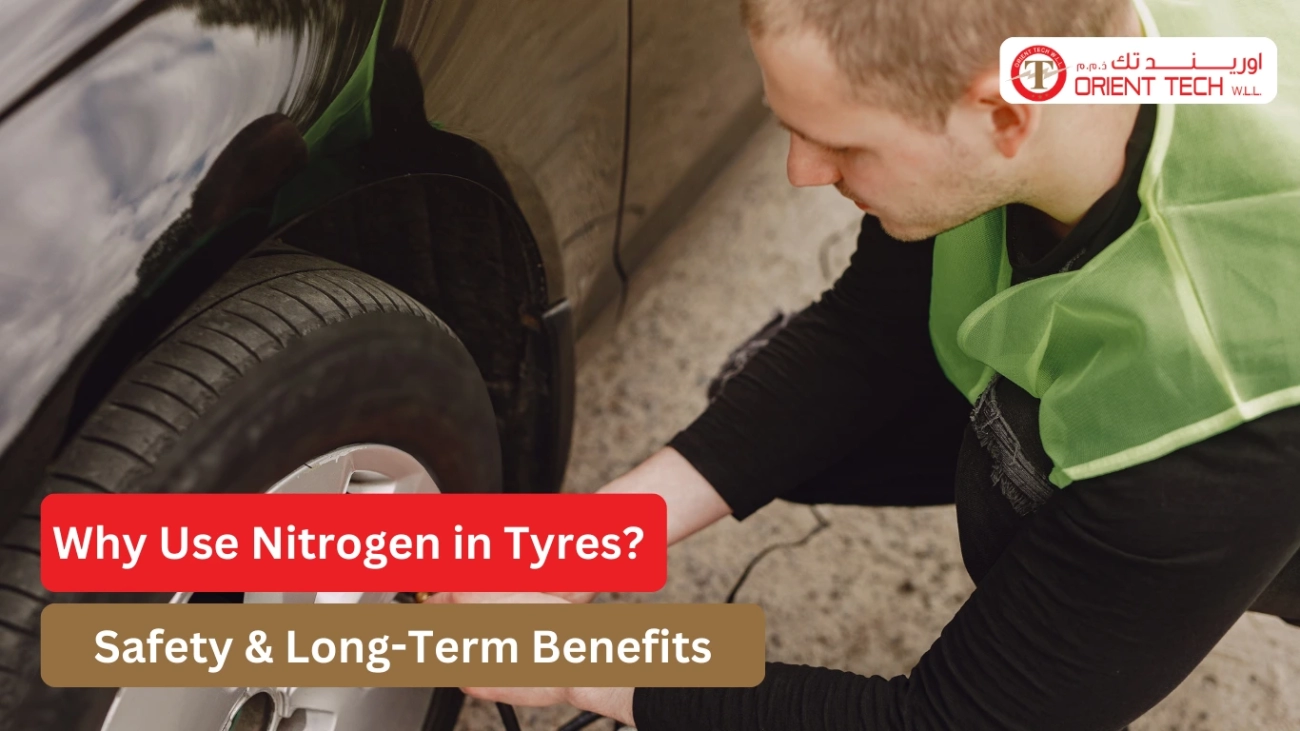
Tyre safety plays a major role in your vehicle’s performance, fuel efficiency, and long-term durability. One of the growing automotive trends today is the use of nitrogen instead of regular air in tyres. Many drivers across the Middle East, including Bahrain, Dubai, and Qatar, are now shifting to nitrogen inflation for better stability and long-term benefits.
In this guide, we’ll break down why nitrogen is used in tyres, how it improves safety, and whether it’s worth choosing for your vehicle.
What Is Nitrogen Tyre Inflation?
Nitrogen tyre inflation means filling tyres with pure nitrogen gas instead of compressed air.
While regular air contains 78% nitrogen, 21% oxygen, and moisture, nitrogen inflation replaces this mix with dry, stable nitrogen for better consistency and reduced pressure fluctuation.
Why Use Nitrogen in Tyres? Key Safety Benefits
Better Pressure Stability
Reduced Risk of Tyre Blowouts
Improved Fuel Efficiency
Longer Tyre Life
Better Handling & Performance
- Steering stability
- Cornering control
- Braking performance
Long-Term Advantages of Nitrogen-Filled Tyres
Less Frequent Pressure Checks
Nitrogen leaks slower due to larger molecules.
This means fewer visits to the tyre shop for pressure checks and top-ups.
Enhanced Performance in Extreme Weather
- Stable pressure in heat
- Safer driving during long trips
- Better load-carrying capacity
Reduced Moisture Build-Up
Compressed air contains moisture that may corrode the inner rim.
Nitrogen is dry and eliminates internal oxidation.
Is Nitrogen Worth It for Your Car?
Nitrogen is especially beneficial if you:
- Drive long distances
- Live in hot climates (Bahrain, UAE, Qatar)
- Own a performance or luxury vehicle
- Want long-term tyre health
- Prefer stable, safer handling
Nitrogen in Tyres for Drivers in Bahrain & GCC
- Prevent heat-related tyre failures
- Maintain safer PSI levels
- Improve vehicle stability on hot highways
- Reduce tyre wear caused by road temperature fluctuations
Conclusion
Nitrogen-filled tyres offer a smarter and safer alternative to regular air, especially in hot climates. From better pressure stability to improved tyre life, nitrogen provides multiple long-term benefits for everyday drivers as well as high-performance vehicle owners.
For reliable nitrogen tyre inflation and expert tyre care, Orient Tech WLL is your trusted service provider offering high-quality tyre solutions across the region.