 +974 55641343
  info@orienttech.com.qa
 +974 4451 2997
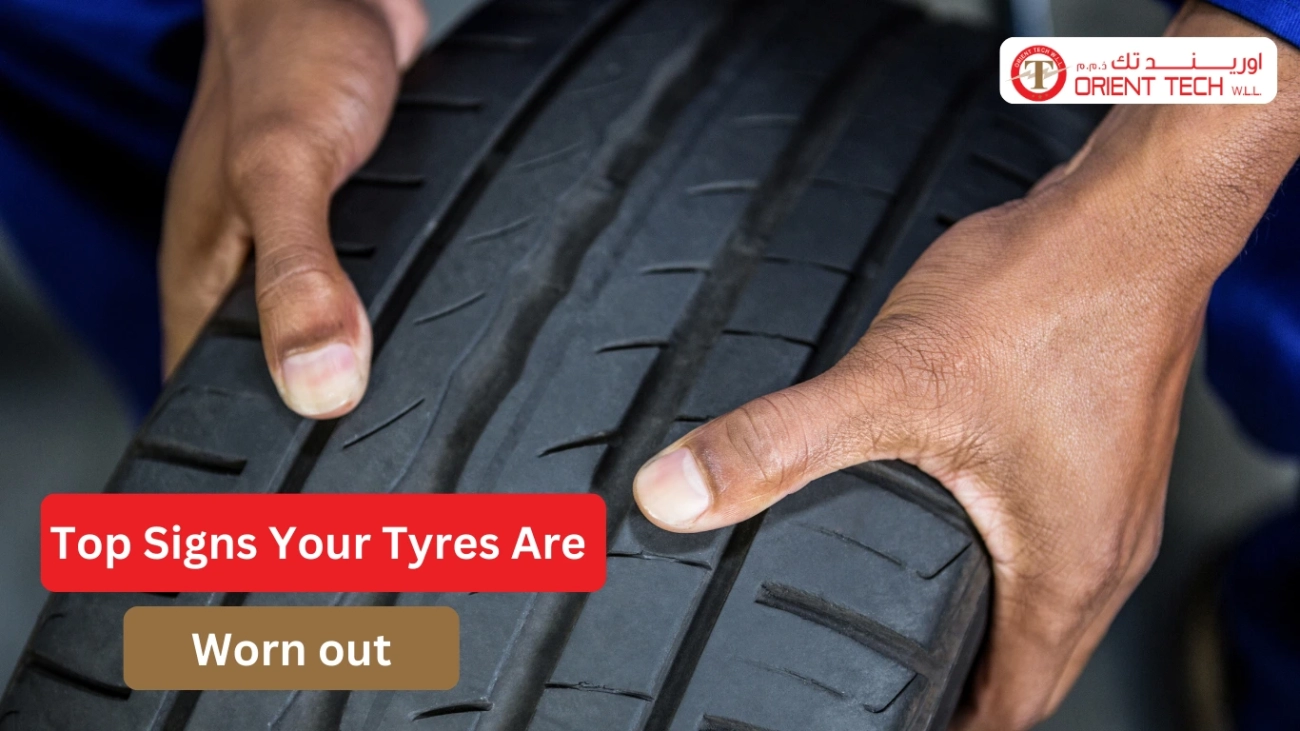
Tyres play a crucial role in your vehicle’s safety, stability, and overall driving performance. Over time, continuous usage, road temperatures, and driving conditions cause tyres to wear out.
Recognizing the signs early helps prevent accidents, blowouts, and costly damage.
This guide explains the top signs your tyres are worn out, when to replace them, and why timely tyre inspection is essential — especially in Bahrain, Saudi Arabia, UAE, and the GCC region.
Understanding Tyre Wear
Low Tread Depth
- Grip
- Braking
- Control in wet roads
Cracks on the Sidewall
- Heat
- UV exposure
- Age
- Low pressure
Bulges or Bubbles
Bulges form when air escapes into the tyre’s outer layers.
This is extremely dangerous and indicates immediate tyre failure risk.
Vibrations While Driving
- Uneven tyre wear
- Misalignment
- Internal tyre damage
- Tyre imbalance
Uneven Tyre Wear Patterns
Uneven wear usually means issues with:
- Wheel alignment
- Improper inflation
- Suspension problems
Common wear patterns include:
- Centre wear
- Shoulder wear
- Cupping
- Feathering
Frequent Tyre Pressure Loss
If tyres keep losing pressure, there may be:
- Internal leaks
- Valve damage
- Bead wear
- Age-related deterioration
2.7 Tyre Age (5+ Years)
Why Worn-Out Tyres Are Dangerous
Worn tyres can cause:
- Loss of braking control
- Hydroplaning on wet roads
- Skidding
- Poor cornering stability
- Increased stopping distance
- High risk of blowouts
Tyre Wear in Bahrain & GCC
The extreme heat in GCC countries accelerates tyre wear.
Road temperatures often exceed 60°C, leading to faster:
- Rubber degradation
- Sidewall cracks
- Pressure fluctuations
- Tread wear
Drivers in Bahrain, UAE, Qatar, and Saudi Arabia should inspect tyres more frequently due to:
- Hot climate
- Long-distance driving
- Heavy traffic
- High-speed roads
When Should You Replace Your Tyres?
Replace your tyres when:
- Tread depth is below 1.6 mm
- There are visible cracks or bulges
- You experience vibration
- Tyres are older than 5 years
- Wear patterns look uneven
- Pressure loss becomes frequent
Conclusion
Identifying the signs of worn-out tyres early is essential for safe, smooth, and reliable driving. Replacing worn tyres on time helps prevent blowouts, reduces fuel consumption, and improves overall vehicle stability.
For professional tyre inspection, replacement, and high-quality tyre services, trust Orient Tech WLL — your reliable tyre experts in the region.