 +974 55641343
  info@orienttech.com.qa
 +974 4451 2997
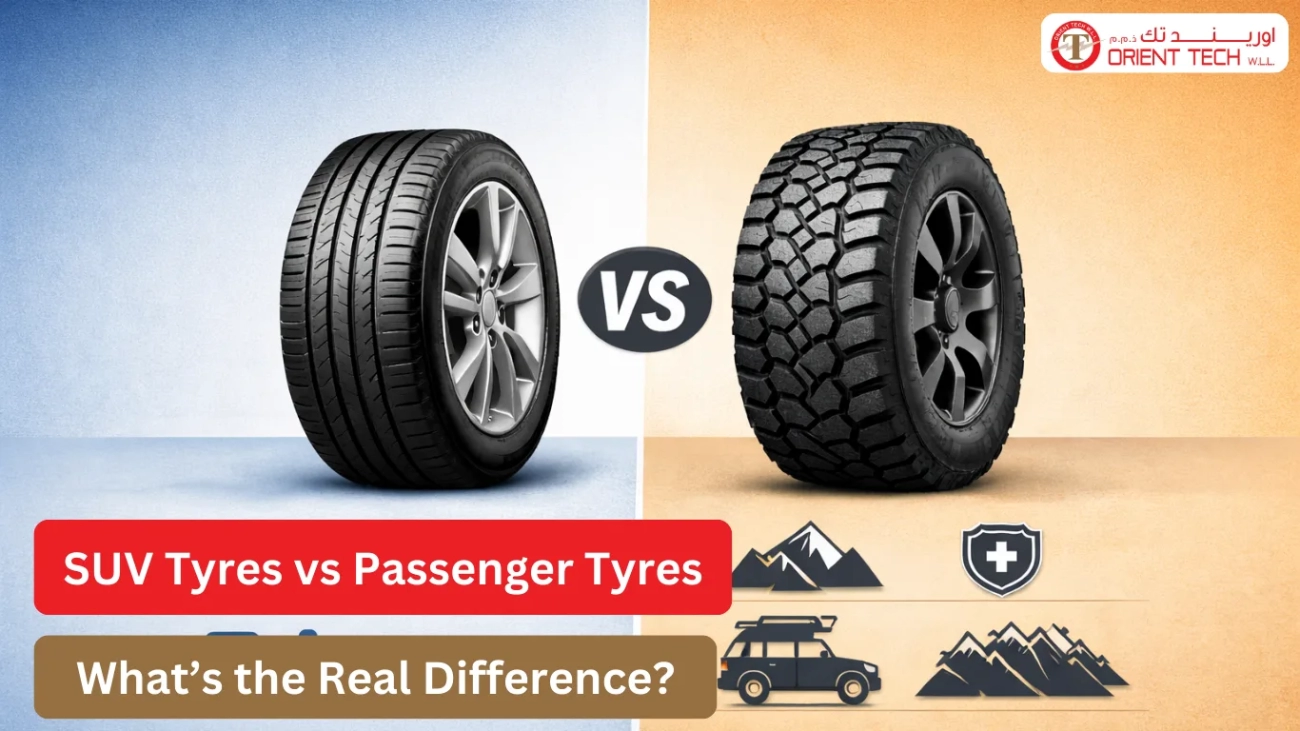
Choosing the right tyres is more important than most drivers realize. Tyres directly affect safety, comfort, fuel efficiency, and overall driving performance. One of the most common questions vehicle owners ask is whether SUV tyres and passenger car tyres are actually different—or just marketed differently.
The truth is, there are real differences. While both types may look similar at first glance, they’re engineered for very different vehicle weights, driving conditions, and usage patterns.
In this guide, we’ll break down the real differences between SUV tyres and passenger tyres, helping you make an informed decision for your vehicle.
What Are Passenger Tyres?
Key Characteristics of Passenger Tyres
- Lighter construction
- Softer rubber compounds
- Optimized for comfort and fuel efficiency
- Designed for paved roads and highways
Passenger tyres focus on providing a smooth, quiet ride with good handling at typical urban speeds.
What Are SUV Tyres?
Key Characteristics of SUV Tyres
- Stronger internal construction
- Higher load-carrying capacity
- Reinforced sidewalls
- Designed for city, highway, and light off-road use
1. Vehicle Weight & Load Capacity
Passenger Tyres
- Built for lighter vehicles
- Lower load index
- Not designed to carry heavy cargo or towing loads
SUV Tyres
- Designed to support heavier vehicles
- Higher load ratings
- Can handle passengers, luggage, roof racks, and towing
Construction & Sidewall Strength
Passenger Tyres
- Softer sidewalls
- Prioritize ride comfort
- Less resistant to impact damage
SUV Tyres
- Reinforced sidewalls
- Better resistance to potholes, curbs, and rough roads
- Improved stability during cornering
3. Ride Comfort & Noise Levels
Passenger Tyres
- Quieter ride
- Better vibration absorption
- Ideal for smooth city driving
SUV Tyres
- Slightly firmer ride
- May produce more road noise
- Tuned for stability rather than softness
4. Handling & Stability
Passenger Tyres
- Excellent steering response at lower vehicle heights
- Less body roll
- Best for compact and mid-size cars
SUV Tyres
- Designed to reduce body roll
- Improved grip for tall vehicles
- Better stability during braking and cornering
5. Tread Pattern & Traction
Passenger Tyres
- Smoother tread patterns
- Optimized for dry and wet city roads
- Less aggressive grooves
SUV Tyres
- Deeper tread blocks
- Enhanced grip on gravel, mud, and uneven surfaces
- Better traction for mild off-road conditions
6. Fuel Efficiency
Passenger Tyres
- Lower rolling resistance
- Better fuel economy
- Ideal for daily commuting
Passenger Tyres
- Lower rolling resistance
- Better fuel economy
- Ideal for daily commuting
7. Tyre Lifespan & Wear
Passenger Tyres
- Lower rolling resistance
- Better fuel economy
- Ideal for daily commuting
SUV Tyres
- Built to withstand higher stress
- Better wear resistance under load
- Longer life when used on SUVs
Can You Use Passenger Tyres on an SUV?
Risks Include
- Reduced braking efficiency
- Increased blowout risk
- Faster tyre wear
- Poor handling during emergencies
Which Tyre Should You Choose?
Choose Passenger Tyres If:
- You drive a sedan or hatchback
- Comfort and fuel efficiency matter most
- You mainly drive on smooth city roads
Choose SUV Tyres If:
- You own an SUV or crossover
- You carry passengers or cargo regularly
- You drive on mixed road conditions
Conclusion
Understanding the difference between SUV tyres and passenger tyres isn’t just about performance—it’s about safety, durability, and long-term value. SUV tyres are engineered to handle heavier loads, stronger impacts, and varied terrains, while passenger tyres focus on comfort, efficiency, and smooth city driving.
Making the right tyre choice ensures better handling, longer tyre life, and peace of mind on every journey. At Orient Tech WLL, we believe that choosing the correct tyre for your vehicle is the foundation of safer and smarter driving.