 +974 55641343
  info@orienttech.com.qa
 +974 4451 2997
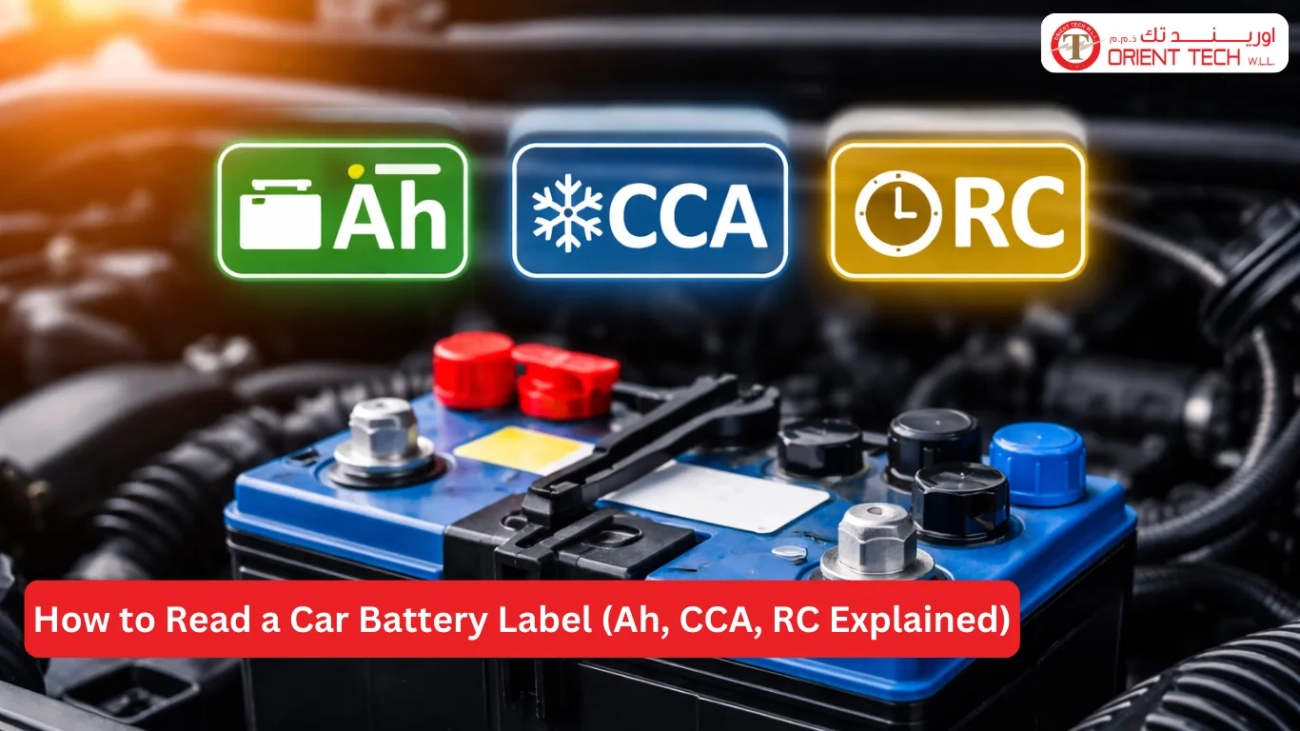
Why Reading a Car Battery Label Is Important
Your car battery is responsible for:
- Starting the engine
- Powering lights and electronics
- Supporting the alternator during high demand
- Running accessories when the engine is off
If you install a battery with the wrong specifications, you may experience hard starting, poor performance, or even damage to your vehicle’s electrical system. That’s why understanding the battery label matters.
What Does Ah Mean on a Car Battery?
Ah = Ampere-Hour Rating
What It Tells You:
- A 60Ah battery can deliver 60 amps for 1 hour
- Or 30 amps for 2 hours
- Or 6 amps for 10 hours
Why Ah Matters:
- Higher Ah means longer power supply
- Important for vehicles with many electronics
- Crucial for SUVs, trucks, and cars with infotainment systems
What Does CCA Mean?
CCA measures a battery’s ability to start your engine in cold temperatures.
Specifically, CCA indicates how many amps a battery can deliver at 0°F (-18°C) for 30 seconds while maintaining at least 7.2 volts.
Why CCA Is Important:
- Higher CCA = stronger starting power
- Essential in cold weather
- Important for diesel engines
- Necessary for large engines
If you live in colder regions, choosing a battery with sufficient CCA is critical. Low CCA can cause slow cranking or complete failure to start.
What Does RC Mean?
RC = Reserve Capacity
Reserve Capacity tells you how long a battery can run essential systems if the alternator fails.
It measures how many minutes a fully charged battery can deliver 25 amps at 80°F (27°C) before dropping below 10.5 volts.
Why RC Is Important:
- Acts as backup power
- Supports lights and electronics during alternator failure
- Gives you time to reach a mechanic
Other Important Information on a Car Battery Label
Besides Ah, CCA, and RC, you may also see:
1. Voltage (V)
Most passenger vehicles use 12V batteries.
2. Battery Group Size
Indicates physical dimensions and terminal placement. Installing the wrong size may prevent proper fitting.
3. Manufacturing Date
Look for a recent manufacturing date. Batteries degrade even when unused.
4. Maintenance Type
- Maintenance-Free
- Low Maintenance
- Conventional (requires water top-up)
How to Choose the Right Battery for Your Car
1. Manufacturer Recommendation
Always check your car manual for recommended Ah and CCA ratings.
2. Driving Conditions
- Cold climate → Higher CCA
- Heavy electronics usage → Higher Ah
- Frequent short trips → Good RC rating
3. Engine Type
- Diesel engines need higher CCA
- Larger engines need stronger cranking power
4. Climate
Hot climates reduce battery lifespan. Choose a battery built for high-temperature durability.
Example: Reading a Battery Label
Imagine a battery label shows:
- 12V
- 65Ah
- 600 CCA
- 110 RC
This means:
- It operates at 12 volts
- Stores 65 amp-hours of charge
- Delivers 600 amps in cold start conditions
- Can run essential systems for 110 minutes if alternator fails
Common Mistakes When Buying a Car Battery
Avoid these common errors:
- Choosing based only on price
- Ignoring CCA requirements
- Installing wrong group size
- Buying old stock batteries
- Overlooking warranty
Signs Your Battery May Be Failing
- Slow engine cranking
- Dim headlights
- Electrical malfunctions
- Dashboard battery warning light
- Frequent jump-start requirements
Conclusion
Reading a car battery label is not complicated once you understand the key terms. Ah tells you how much charge the battery can store, CCA indicates its starting strength in cold temperatures, and RC measures how long it can supply backup power.
By choosing the correct specifications based on your vehicle type, climate, and driving habits, you can improve performance and avoid unexpected breakdowns.
For high-quality automotive batteries and expert guidance in selecting the right battery for your vehicle, you can rely on Orient tech WLL for reliable and professional solutions.