 +974 55641343
  info@orienttech.com.qa
 +974 4451 2997
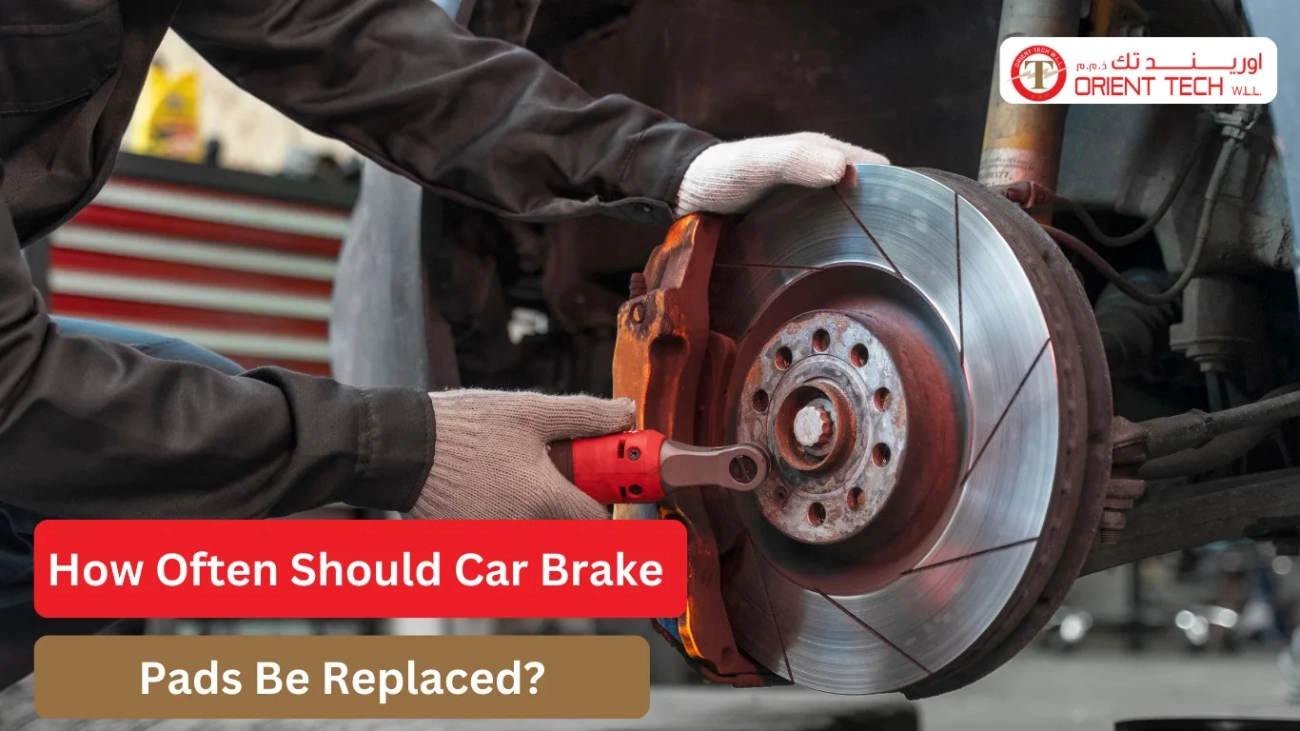
When it comes to staying safe on the road, your car’s braking system is non-negotiable. Among all braking components, brake pads take the most daily wear and determine how effectively your vehicle stops. But the most common question drivers ask is:
“How often should I replace my car brake pads?”
This detailed guide breaks it down for you.
What Are Brake Pads and Why Are They Important?
How Often Should Car Brake Pads Be Replaced?
Most cars need brake pad replacement every:
30,000 to 70,000 kilometers (18,000–45,000 miles)
However, the exact interval depends on:
- Driving habits
- Road conditions
- Type of brake pads
- Vehicle weight & braking system
- Traffic and climate conditions
Key Factors That Affect Brake Pad Lifespan
1. Driving Habits
2. Type of Brake Pads
- Ceramic Pads: Longest lasting
- Semi-Metallic Pads: Powerful but wear faster
- Low-Metallic / Organic Pads: Quieter but shorter lifespan
3. Vehicle Type
4. Road & Climate Conditions
Dusty, sandy, or hot environments increase pad wear due to heat buildup and debris.
Warning Signs Your Brake Pads Need Replacement
Squeaking or Squealing Sounds : Built-in wear indicators produce a high-pitched sound.
Grinding Noise : Metal-to-metal contact—dangerously worn pads.
Reduced Braking Performance : Longer stopping distance or poor brake response.
Vibrations While Braking : Often caused by uneven pad wear or rotor issues.
Brake Pad Thickness Below 3mm : Anything less than 3 mm is unsafe.
How to Extend the Lifespan of Your Brake Pads
- Avoid aggressive braking
- Maintain proper tyre pressure
- Get brake inspections every 10,000 km
- Replace brake fluid every 2–3 years
- Use high-quality brake pads
- Keep rotors clean and aligned
Professional Brake Pad Inspection: Why It Matters
- Safer braking
- Reduced repair costs
- Longer rotor lifespan
- Better driving comfort