 +974 55641343
  info@orienttech.com.qa
 +974 4451 2997
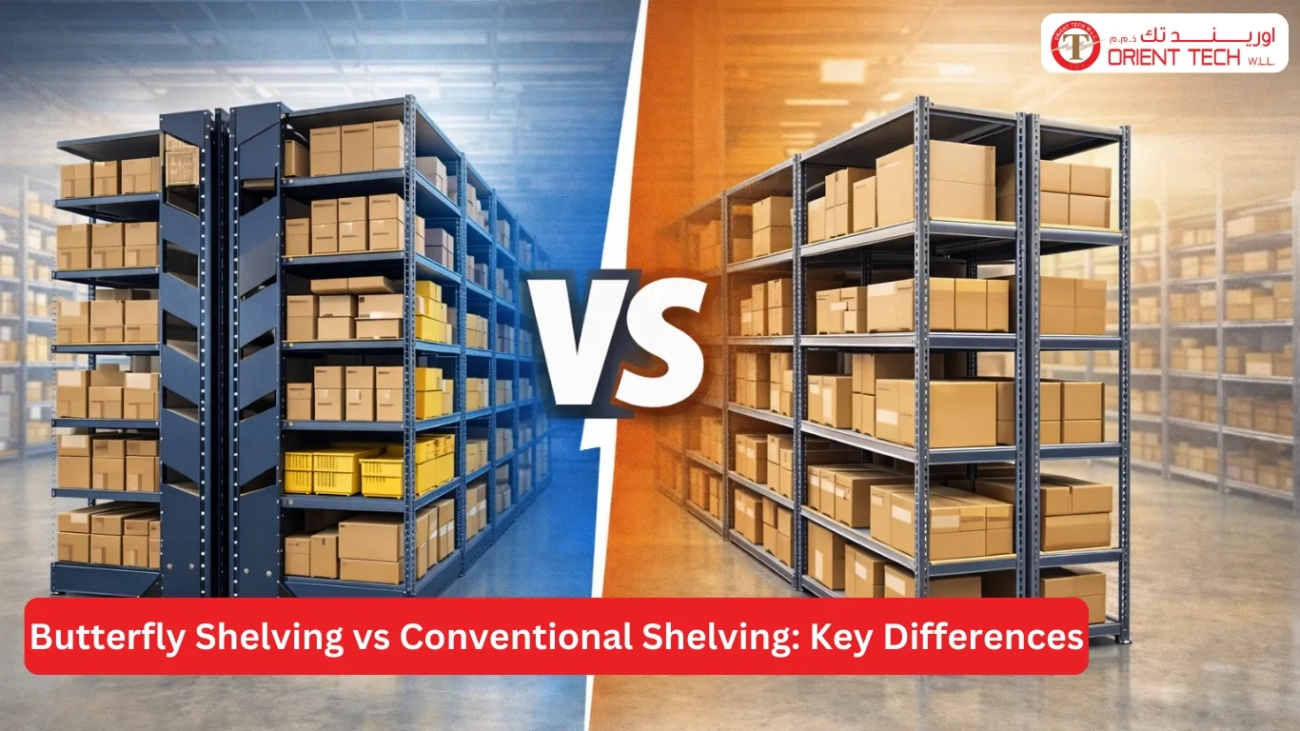
Choosing the right shelving system is crucial for maximizing storage efficiency, improving accessibility, and maintaining workplace safety. Among the most commonly compared storage systems are Butterfly Shelving and Conventional Shelving. While both are designed to organize and store goods effectively, their structure, application, and benefits differ significantly.
What is Butterfly Shelving?
Key Features of Butterfly Shelving:
- Angled or sloped shelf design
- Enhanced product visibility
- Optimized space utilization
- Ideal for high-turnover inventory
- Easy access from multiple angles
What is Conventional Shelving?
Key Features of Conventional Shelving:
- Flat, horizontal shelf design
- Simple and sturdy structure
- Easy installation and modification
- Cost-effective solution
- Suitable for diverse storage applications
Key Differences Between Butterfly Shelving and Conventional Shelving
1. Design and Structure
The most noticeable difference lies in the design.
Butterfly Shelving features angled or uniquely structured shelves that improve product accessibility and visibility.
Conventional Shelving uses flat horizontal shelves supported by upright frames.
Butterfly shelving is engineered for faster picking and better product display, while conventional shelving focuses on straightforward storage.
2. Space Utilization
Space efficiency is a critical factor in any storage environment.
Butterfly Shelving is designed to optimize available space by allowing better product arrangement and reducing wasted vertical or horizontal areas.
Conventional Shelving provides good space utilization but may not maximize accessibility in high-density storage setups.
For businesses with limited floor space, butterfly shelving can sometimes offer improved efficiency.
3. Accessibility and Picking Speed
Accessibility plays a major role in warehouses and retail operations.
Butterfly Shelving allows easier access to products due to its angled layout, which can reduce picking time and improve workflow efficiency.
Conventional Shelving requires manual searching and reaching, which may slow down operations in high-volume environments.
If your business relies heavily on fast order fulfillment, butterfly shelving may offer an advantage.
4. Load Capacity and Durability
Load capacity depends on material and construction.
Conventional Shelving is often known for its strong load-bearing capacity and durability, making it suitable for heavy items.
Butterfly Shelving is typically designed for medium-weight items and high-rotation products.
For storing bulky or heavy goods, conventional shelving may be more suitable.
5. Installation and Flexibility
Conventional Shelving is easy to install, adjust, and expand. It offers flexible configurations and can be customized for different storage heights.
Butterfly Shelving may require more specialized installation depending on its design.
If flexibility and easy modification are priorities, conventional shelving may be the better choice.
6. Cost Considerations
Budget plays a significant role in decision-making.
Conventional Shelving is generally more cost-effective due to its simple design and widespread availability.
Butterfly Shelving may involve higher initial investment because of its specialized structure.
However, butterfly shelving can improve operational efficiency, potentially offsetting initial costs in high-demand environments.
7. Ideal Applications
Butterfly Shelving is ideal for:
- Retail stores
- Distribution centers
- Fast-moving consumer goods storage
- Order picking operations
Conventional Shelving is ideal for:
- Warehouses storing heavy items
- Industrial storage
- Office storage
- General-purpose storage needs
Which One Should You Choose?
The right choice depends on your specific storage needs, inventory type, and budget.
Choose Butterfly Shelving if:
- You need faster picking and better product visibility
- You handle high-turnover inventory
- Space optimization is critical
Choose Conventional Shelving if:
- You require heavy-duty storage
- You need a cost-effective solution
- Flexibility and simple installation are important
Evaluating your operational requirements and long-term goals will help you select the most suitable system.
Advantages and Disadvantages Summary
Butterfly Shelving
Advantages
- Improved accessibility
- Faster picking
- Modern design
- Better product visibility
Disadvantages:
- Higher cost
- May not support very heavy loads
Conventional Shelving
Advantages
- Affordable
- Strong load capacity
- Flexible configuration
- Easy installation
Disadvantages:
- May be less efficient for high-speed picking
- Standard design may limit visibility