 +974 55641343
  info@orienttech.com.qa
 +974 4451 2997
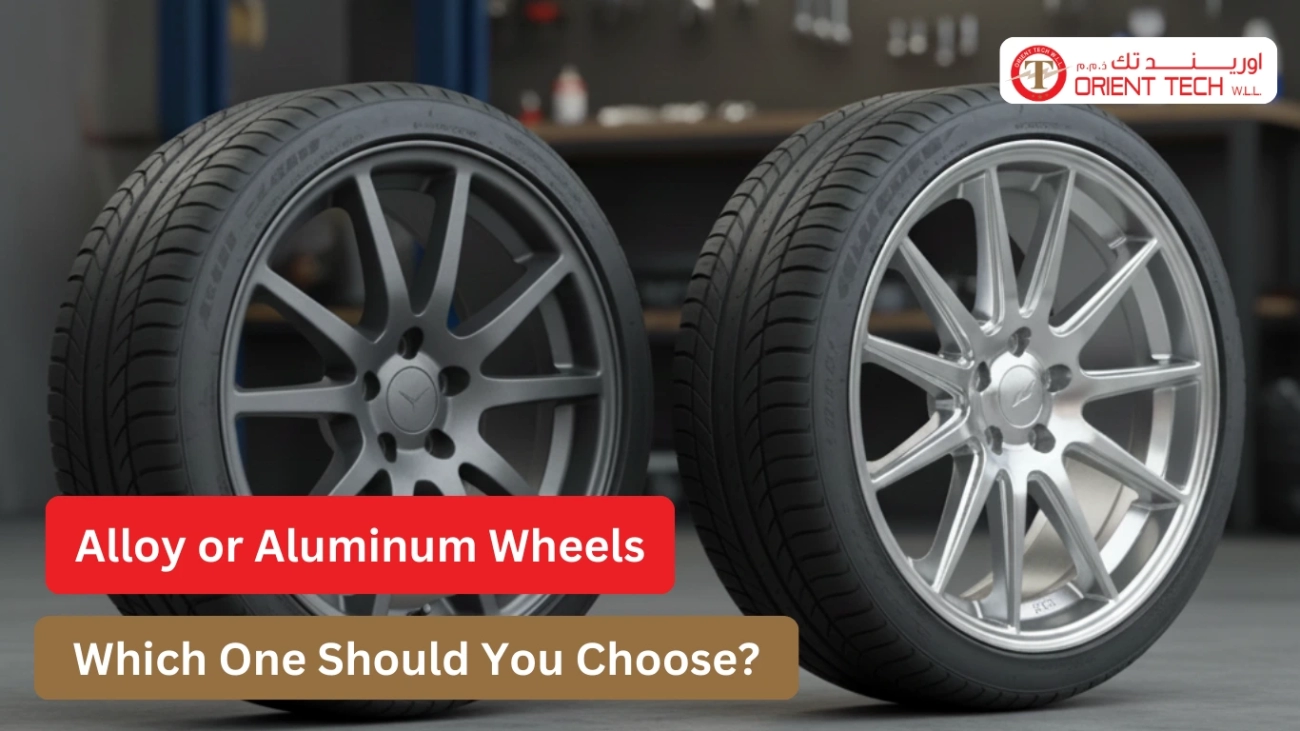
Your vehicle’s wheels play a major role in performance, safety, and driving comfort. Many car owners today look beyond standard steel wheels and consider either alloy wheels or aluminum wheels for better looks and improved handling.
But which one is right for your vehicle?
In this guide, we explain the differences between alloy and aluminum wheels, their advantages, and how to choose based on your driving needs — especially in Bahrain, UAE, Saudi Arabia, and GCC driving conditions.
What Are Aluminum Wheels?
Aluminum wheels are wheels made entirely from aluminum metal.
They are:
- Lightweight
- Good for fuel efficiency
- Resistant to rust
However, they may not be as strong as multi-metal alloys
What Are Alloy Wheels?
Alloy wheels are made from a mixture of aluminum + other metals (usually magnesium).
This makes them:
- Stronger
- More durable
- Better at heat dissipation
Advantages of Alloy Wheels
More Strength & Durability
- Rough roads
- High-speed driving
- Heavy vehicles
Better Heat Dissipation
Enhanced Design & Style
- More designs
- Better finishing
- Premium appearance
Improved Handling
- Steering response
- Acceleration
- Braking
Advantages of Aluminum Wheels
Lightweight Construction
- Improves mileage
- Reduces engine load
Cost-Effective Choice
Good for Daily Use
- City driving
- Normal road conditions
- Everyday commuting
Which One Should You Choose?
Choose Alloy Wheels if you want:
- Stronger wheel structure
- Better braking
- performance
- High-speed stability
- Stylish modern designs
- Better heat resistance
Choose Aluminum Wheels if you want:
- Budget-friendly performance
- Lightweight wheels for fuel efficiency
- Good everyday driving in city conditions
Best Wheel Choice for GCC Conditions
Drivers in Bahrain, UAE, Qatar, and Saudi Arabia experience:
- Extreme heat
- Long-distance drives
- High-speed roads
- Hot road surfaces
These conditions demand wheels that can handle heat effectively.
Alloy wheels perform better due to:
- Superior strength
- Better heat dissipation
- More resistance to cracks and deformation