 +974 55641343
  info@orienttech.com.qa
 +974 4451 2997
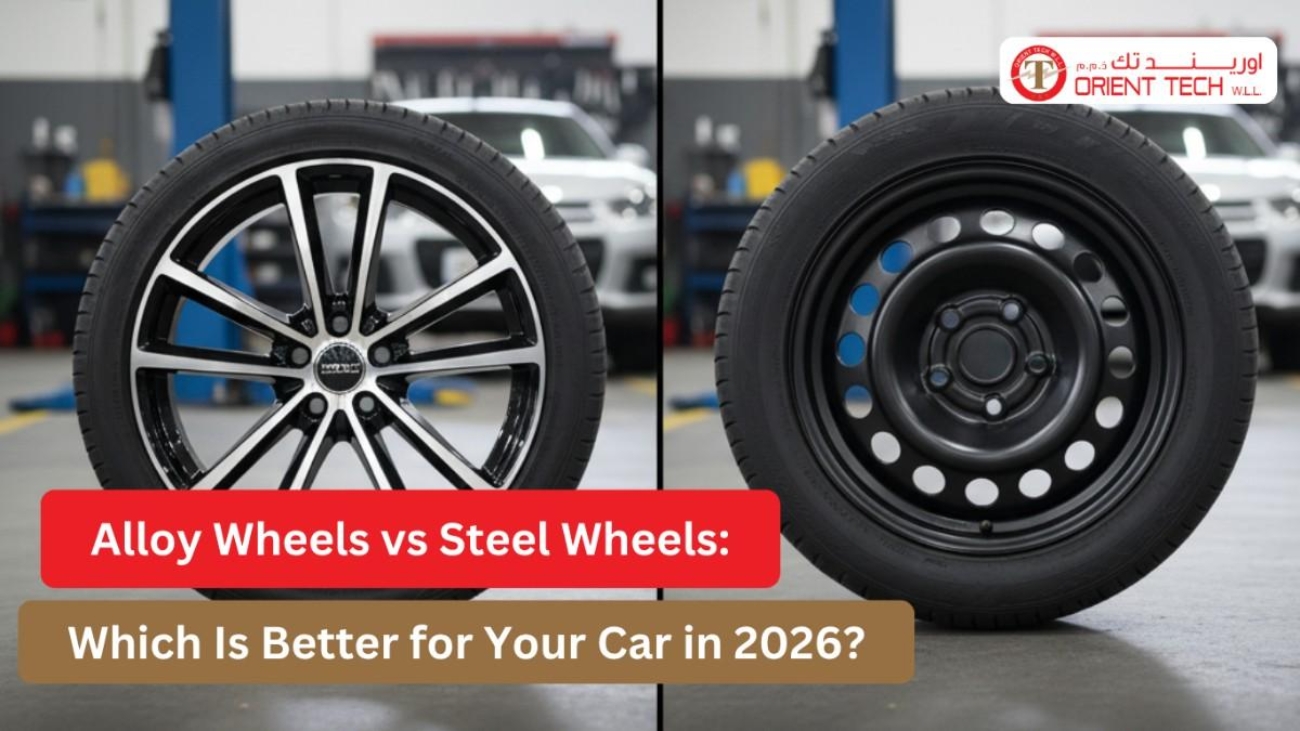
Choosing between alloy wheels and steel wheels has long been a debate among car enthusiasts and everyday drivers alike. Both materials have evolved over time — and as we move into 2026, technological improvements have made the differences even more significant.
Whether you drive on Qatar’s smooth highways or tackle sandy roads, selecting the right wheel type can make a big difference in performance, durability, style, and fuel efficiency. Let’s explore both wheel types in depth so you can make the best decision for your car in 2026.
Understanding the Basics: Alloy vs. Steel Wheels
What Are Alloy Wheels?
Alloy wheels are made from a blend of aluminium or magnesium combined with other metals. This mix creates a lightweight yet strong wheel, known for better heat conduction and stylish designs.
What Are Steel Wheels?
Steel wheels, on the other hand, are made from pressed and welded steel. They are heavier, more durable, and less expensive than alloy wheels. Although not as stylish, they are a preferred choice for rugged use, heavy vehicles, or harsh environments.
1. Durability and Strength
Steel Wheels:
Steel is known for its toughness. These wheels can withstand rough impacts, making them a solid choice for off-road or commercial vehicles. Even if bent, steel wheels can often be hammered back into shape.
Alloy Wheels:
Alloy wheels, while strong, are more prone to cracking under extreme stress. However, the latest 2026 alloys are much more resilient thanks to improved casting and forging methods.
2. Weight and Performance
Alloy Wheels:
Their lightweight nature reduces unsprung weight, meaning your suspension can respond more quickly. This leads to better acceleration, braking, and handling — especially useful on Qatar’s high-speed expressways.
Steel Wheels:
Heavier wheels increase overall weight, reducing performance and fuel economy. They may make the car feel more stable but also less responsive.
3. Heat Dissipation and Brake Performance
Alloy Wheels:
Alloys conduct heat better, which helps dissipate brake heat more efficiently. This prevents brake fade, extending the life of both your brakes and tyres.
Steel Wheels:
Steel retains heat longer, which can increase brake wear during long drives in hot conditions.
4. Aesthetics and Style
Alloy Wheels:
They are available in sleek, modern designs — from polished finishes to sporty multi-spoke patterns. In 2026, customization options like two-tone finishes and aerodynamic designs are widely available.
Steel Wheels:
These typically come in simple, utilitarian designs and are often covered with hubcaps. They focus on function, not form.
5. Cost and Maintenance
Alloy Wheels:
Generally more expensive than steel, alloy wheels require careful handling. They can be harder to repair if cracked, but powder-coated finishes in 2026 make them more corrosion-resistant than before.
Steel Wheels:
Affordable, easy to repair, and built for tough use. However, they are more prone to rust, especially near coastal areas like Doha or Al Wakrah if not maintained properly.
6. Driving Comfort and Ride Quality
Alloy wheels provide a smoother, more refined ride due to reduced vibration and better balance. Steel wheels, while sturdy, can transfer more road shock and feel heavier during acceleration and braking.
In 2026, modern alloy wheels with enhanced structural design provide excellent comfort and better noise absorption — perfect for long highway drives across Qatar.
7. Environmental Impact
Alloy Wheels:
Aluminium is recyclable, and modern production methods reduce waste and energy use. Their lighter weight also contributes to lower fuel consumption and emissions.
Steel Wheels:
Steel is also recyclable, but its manufacturing process involves more energy and higher emissions.
Final Verdict
If you’re a daily commuter, highway driver, or car enthusiast in Qatar, alloy wheels are the smarter choice in 2026. They offer better fuel efficiency, improved handling, and stylish designs that elevate your vehicle’s look and performance.
However, if you operate a commercial vehicle, drive off-road frequently, or prioritize durability and cost-effectiveness, steel wheels still make practical sense.
Conclusion
Whether you’re leaning towards alloy wheels or steel wheels, getting expert advice ensures you make the best investment. At Orient Tech WLL, Qatar’s trusted tyre and wheel specialists, you’ll find a wide range of premium alloy and steel wheels designed to meet 2026’s standards for performance, safety, and style.
From selection to fitting and balancing, Orient Tech WLL helps you choose wheels that perfectly match your car, driving needs, and Qatar’s unique road conditions.